Total Pageviews

Sunday, April 3, 2022

rainy days, written by Deborah Kerbel and illustrated by Miki Sato. Pajama Press, 2022. $19.95 ages 2 and up


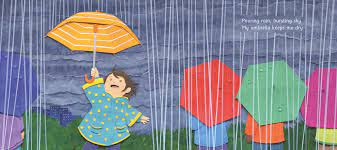
"Pouring rain, bursting sky
My umbrella keeps me dry

Stormy rain, flash and boom 
Watching from a cozy room
"

Poetry is very important for little ones. They respond to the rhythm of the words, and begin to understand that many words sound the same. Rhyme is a very important part of the reading process. Children who know how to rhyme have a better chance of success at school. 

This is the fourth in a series of padded hardcover books for our youngest readers. It follows Windy Days, Sunny Days and Snow Days. What a way to get started on a library for a new baby or a favorite toddler. Each of the books captures the magic found in nature and its many blessings. 

The rhymes are playful, rolling off the tongue as the book is shared again and again. The collage art is a reminder of the other books in the series. Created with paper collage, textiles and embroidery silk, the illustrations are appealing for their attention to detail. You will want to pore over them with your little one in your lap, and allow time for a long look and constant conversation. Five fun experiments are suggested following the text. There are so many things you can do outside on rainy days. This beautiful book is a reminder of that. The time is coming!                                                

Saturday, April 2, 2022

Away With Words, written by Mary Ann Hoberman and illustrated by Perry Hoberman. Little, Brown and Company, Hachette. 2022. $23.99 ages 7 and up


"CONTRACTIONS

I'll for I will
I've for I have 
I'm for I am
For Madam use Ma'am.

Do the letters we drop
When someone shortens a word
Feel somewhat unhappy 
Or is that absurd?

I know how I feel 
When I'm left out of things
I know it seems silly
But, oh, how it stings!
"

I have been a fan of Mary Ann Hoberman for many years. Hopefully, any school poetry collection includes some of her books. In this collection, she takes a close look at the way we play with and use words. In more than 50 poems, she looks at a wide variety of subjects that include the alphabet, assonance and alliteration, grammar, puns, punctuation, the rhyme and rhythm in words and phrases, family, word choice, and fun. 

It's important to share poetry with children in school and at home as often as possible. Poetry gives them a clear look at how words work, alone and together. It introduces children to new ideas and concepts. It shows them how to use words to paint pictures, and lends drama for many occasions. 

This poem would make a perfect mentor text for observation and writing, and a wonderful way to encourage critical thinking. 

"ME 

I have an arm
       And a chair does, too! 
I have a leg 
        And a table does, too!
I have an eye 
         And a needle does, too! 
I have a mouth
          And the river does, too! 
I have an ear
           And the corn does, too! 
I have a head 
            And a bed does, too!
I have a neck 
             And a bottle does, too! 
I have a foot
             And a hill does, too! 
I have an elbow
              And a pipe does, too! 
I have a shoulder 
              And a road does, too! 

The chest (of drawers) 
The trunk (of a tree)
The heel (of the bread)
They're all like me! 
It's mighty strange,
Don't you agree?

Friday, April 1, 2022

Moving Words About a Flower, written by K.C. Hayes and illustrated by Barbara Chotiner. Charlesbridge, Penguin Random House. 2022. $19.99 ages 4 and up


"As the days passed, 
the yellow dandelion 
grew bigger and bigger, 
and 
within a 
few weeks, 
it had become 
a feathery 
white ball of 
seeds.
"

I cannot do justice to the placement of words on this double-page spread. The design is so wonderful throughout, and cannot be captured in a blog post. I hope that entices you to find this clever book at a nearby bookstore or library. 

It seems a perfect time to share it - on this first day of National Poetry Month. The fact that it is about a dandelion, the floral symbol of Ukraine makes it even more exceptional. We know the resiliency of the dandelion, and we are learning daily about that same tenacity of the Ukrainian people. 

The joy to be found in words that roll, hurry, bend, and sail, will engage young readers as they learn about the life cycle of a dandelion. Little ones spot the bold yellow of these flowers as soon as they emerge from the ground. They are quick to pick and offer them to adults in their lives. The beauty of the ball of seeds leads to breathy launches, sending each seed further out into the world where they find a place to land and begin their cycle all over again. 

These shape poems (also called concrete poems) always attract attention. They dance across the pages in harmony with the settings - from a sidewalk crack where it opens its petals to the grassy fields of a farmyard where it makes a new home. With the arrival of spring, each tiny seed sends down roots that will grow to become a harbinger of spring and summer. Of the three seeds followed to matuirity, only one survives to grow, thrive, and send new seeds into the world. 

Back matter includes further information and a list of research sources. The illustrations 'are done in mixed traditional media and digital collage. Impressive!                                                                                         


Thursday, March 31, 2022

In Our Garden, written by Pat Zietlow Miller and illustrated by Melissa Crowton. G.P. Putnam's Sons, Penguin Random House. 2022. $23.99 ages 4 and up


"But it takes more than ideas
to build a garden. 

Gardens take work. Hard work. 
Lift-high-and-lug, pull-and-tug work. 
Parents and neighbors bring piles of supplies.
"

I am excited to be able to share a number of new books about growing gardens. As we embrace the evolution of the field-to-table movement, more and more families look to growing their own foods in every way they can. 

Millie is new to the neighborhood, and missing her faraway home. Her surroundings are gray and dull. That makes it hard for Millie to feel sunny and optimistic. Today, she is sparked by an idea. Maybe she can make her gray place feel more like home. Her idea is a garden! 

Her friends are not sure it's possible. There is no space at school. Millie disagrees. In class they are learning about seeds. Millie makes her suggestion:

"I tell everyone how I used to live in a tall building - 
more than an ocean away. 
I helped my family grow food. On our roof. 
Cabbages. Radishes. Carrots. 
And cauliflower. Which isn't a flower at all.

Millie presents her plan. The teacher suggests making a list of supplies. Suddenly, everyone is keen to share their ideas. The work can begin with everyone knowing it will be hard and lengthy. It's all made better when many people pitch in to help. Once planted, the seemingly endless waiting to see growth begins.  All the while, the children are learning - science, math, spelling, reading. When the first seed sprouts, the excitement ramps up. 

"Grow plants, grow!"

They do, and soon families are taking home bags of produce. Millie's community garden is a grand success. Bravo, Millie! 

Mixed media art is full of warmth, and demonstrates the many stages of planning, clearing, planting, growing, and the benefits of people getting together to make something really special happen. Welcome, spring and all the joys it can bring.                                                                                      


Wednesday, March 30, 2022

The Legend of GRAVITY: A TALL Basketball Story, written and illustrated by Charly Palmer. Farrar Straus Giroux, Macmillan, Raincoast.2022. $25.99 ages 10 and up


"We had always been good, but we had never won a 
championship. We thought Gravity would be our 
missing link. Truth be told, he was often a one-man 
show. Gravity once jumped so high that we were able
to go out for ice cream before he came down.
"

Charly Palmer writes and illustrates his first picture book to celebrate the basketball wizards who play without NBA recognition. Can you even imagine how many there are? Focusing on one such player, the narrator introduces him:

"No, not gravity, the centripetal force
pulling us to the center of the earth.
I'm talking about GRAVITY: the greatest 
ballplayer to ever lace up a pair of 
sneakers."

What follows is an homage to those kids who show up to play on basketball courts everywhere. No one has seen them until they arriive one day and ask to play. The surprise always come when that new player can run circles around those already assembled. This guy doesn't yet have a playground name; the rest of the players want to change that. Everyone else on the court has one. 

"They call me Liquid 
because I'm so smooth.
"

A name is given: Gravity. He joins the Eagles. Others begin showing up to see him play, and to challenge the team. His accomplishments are the talk of the neighborhood. A summer of winning leads to the Best of the Best Milwaukee Basketball Tournament, and a strategy for winning - get the ball to Gravity and that should do it. The weekend goes well with the team making the finals against the East Side Flyers, formidable adversaries. The stands are filled with fans, the competition intense. Is the team depending too much on one player? 

Gravity shows what leadership is all about when he tells them:

"I can't win this game," Gravity said. 
"But WE can.
"

He then turns his attention to the narrator, an older Black girl, who has garnered little recognition on her team. Gravity knows every member of his team well. Butta proves herself worthy of his trust. They all play as a team of one. Twenty-five years after winning, the team still does what they do best - play ball! 

Energetic artwork brings basketball to life on the page. It shows all of the movement and drama of the game. An author's note reflects Mr. Palmer's admiration for the legends of streetball everywhere. I am a keen fan of the game, and especially love when all players are allowed to make a contribution to the success of their team. It doesn't always happen that way. Gravity shows readers just how important it really is. 

Tuesday, March 29, 2022

Lentil Soup, written by Carole Tremblay and illustrated by Maureen Poignonec. Translated by Charles Simard. Orca Book Publishers. 2021. $19.95 ages 4 and up


"Ready to eat? 

No, it's still too hot. What 
else is in the soup? There, 
for example, what's that? 

Diced carrots. 

Where do carrots come from?
Are you going to make me 
guess? 

(sigh)"

I can't wait to share this charming book with my granddaughters. It is such an enjoyable way to encourage critical thinking and to learn about different foods. A younger brother counts on his older, wiser one to answer all the questions he has about the soup they are about to have for lunch. A question is asked, four choices are given as the correct answer. Only one is realistic. The little one makes the proper guess. Because his soup is still hot, he offers up another question. What kind of soup did Uncle Herman make? 

Lentil soup it is. But, where do lentils come from? Again, four answers are provided. Three are pretty funny. The right answer is given. The big brother provides further explanation. The soup remains too hot to taste. What is that in the bowl? Diced carrots. 

"Where do they come from! 
Are you going to make me guess? 

(sigh)

Luckily for interested and entertained readers (and listeners), there are many more ingredients: celery, onions, tomatoes, broth, salt). When big gets really tired of answering the endless questions, little provides his own answers. Attempts at answering lead to ridiculous assumptions and the need for the real answer from the older brother. By the time the final ingredient is described, the soup is too cold to eat, and the wiser brother far too annoyed to answer yet another question. The soup is reheated, a recipe for lentil soup is provided and this engaging story comes to an end. 

Amusing, informative, and offering a chance to extend the story by making a pot full of delicious lentil soup brings the story full circle and leaves listeners wanting to hear it again. The many detailed and contextual drawings add to the allure of the story, and will encourage conversation. 

Monday, March 28, 2022

Miguel's Community Garden, written by JaNay Brown-Wood and illustrated by Samara Hardy. Peachtree, Thomas Allen and Son. 2022. $22.99 ages 4 and up


"A sunflower has many seeds that 
are clustered together around its
round center. Is that a sunflower?

No. Those are mulberries. Mulberries
grow as clusters, but their many seeds 
are spread through their berries.
"

Anyone thinking about gardens these days? We still have lots of snow on the ground; just considering the arrival of spring has people beginning to make plans for what they will grow this year. In schools, I am sure classrooms are busy discussing what should be grown in a school garden. 

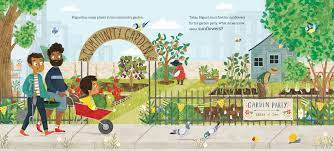
Miguel's community garden has many plants, and lots of volunteer gardeners. Today's the day to celebrate it with a garden party. He and his dads arrive with tools in hand, a wheelbarrow, and a gathering basket. Miguel is especially interested in finding the sunflowers. 

A narrator asks readers to share their knowledge about sunflowers. A double-page description, illustrated with precise detail, gives a clear look at the whole plant. Readers are then invited to help Miguel find one. The text begins with an apricot tree; the similar point is that it is a tall plant. On to artichokes which have petals, green not yellow. 

The trip around the garden moves from one plant to another; each has one of the sunflower's attributes. Still, each is slightly different. Learning about the various plants visited is informative and accessible. As Miguel moves forward, he is concerned they will not be able to find what he is looking for in time for the party. Can that be true? You know the answer to that! 

Samara Hardy created her colorful garden setting with hand painted ink and watercolor textures in Photoshop. Every double-page spread is inviting and provides background for the search. The final spread shows party guests enjoying a picnic comprised of the many fruits of their labor, followed by a most delicious-looking recipe for a sunflower seed salad. Excellent fare for learning about nature and its bounty. 

This is the second book in the Where in A Garden? series, following Amara's Farm (2021). 


Sunday, March 27, 2022

Dragon Bones: The Fantastic Fossil Discoveries of Mary Anning. Written by Sarah Glenn Marsh and illustrated by Maris Wicks. Roaring Brook Press, Macmillan. Raincoast. 2022. $26.99 ages 5 and up


"They called the fossilized shells and bones 
"curios," short for "curiosities."

Mary hated to sell the curios. She longed to 
slip a few treasures into her pocket to study 
alone later. She knew they contained forgotten 
stories and hidden secrets." 

Spring books bring an assortment of new and intriguing picture book biographies. I have read others about Mary Anning: Dinosaur Lady (Sourcebooks, 2020), Stone Girl, Bone Girl (Frances Lincoln, 2006), Rare Treasure (HMH, 1999) and Mary Anning's Curiosity (Groundwood, 2017). There are others, of course. 

This one is focused on Mary's childhood, and her early penchant for hunting treasure. The family lived near the sea, and storms would often force them from their home because of flooding. The aftermath of those storms led the family to search the cliffs for any treasure to be found there. 

Mary, her brother Joseph, and their father would work diligently to see what the storm had left in its wake. Mary always wanted to be first to find treasure. Once found, the treasures all had to be sold to support the family through hard times. Reluctantly, those many finds were sold with Mary wondering all the while what they were giving up. 

The three made quite the team. When Mary's father died, it was left to the children to continue the family's work. Mary led the way, always imagining that one day they would find something very special. Her brother made quite an amazing discovery. When her brother grew tired of the work, it was left to Mary to continue working to unearth a giant crocodile. It made the news. 

As the years passed, Mary continued making many more important finds. She pursued new learning at every dig, and making discoveries ... all on her own. A big find led to many scientific papers. Not one mentioned Mary. Mary faced discrimination as a scientist in a world that took little stock in women who proved themselves worthy of attention for their fine work.  Mary persevered, finally opening her own shop where she could show others what she had discovered. She never gave up looking for more. 

Back matter includes further information about Mary, her dragons, and guidance on how to become a paleontologist. Finally, a selected bibliography is shared. 

Engaging, accessible, and accompanied by excellent digital art, this is a book that readers are sure to experience with a sense of awe for Mary's perseverance through some very hard times.                                                                                    


Saturday, March 26, 2022

Bear and the Whisper of the Wind, written and illustrated by marianne dubuc. Princeton Architectural Press, Raincoast. 2022. $24.95 ages 4 and up


"It's been so long since he's spoken to someone. 
Bear almost has forgotten how.

Before Bear can make up his mind, Rabbit 
peeks out from a window. 
"It's going to be dark soon!"
he says, inviting Bear inside.
"

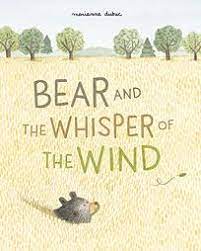
I look forward to any new book by Marianne Dubuc. Her elegant artwork using pencil, colored pencil and watercolor draws readers into her quietly told stories. Children are drawn to her characters and their actions. They will admire Bear, who lives in a comfortable house, welcomes guests, and enjoys the life he lives. 

Then one day, when the wind changes, Bear makes the decision to pack his things and leave everything behind him. He is looking for 'something new'. He leaves his comfy home, with no destination in mind. He simply walks, enjoying his surroundings and moving forward. When he comes upon a rabbit living in a cozy house, he stops. 

Bear is uncertain about approaching the rabbit. He has been on his own for some time now. Rabbit proves welcoming and invites Bear inside. Bear feels much better than he has in recent days. He stays to offer help with work that needs to be done. Before long, he hears another whisper in the wind. It's time to carry on. 

Bear feels concern about some of the choices he has made. A frog along Bear's path suggests that his journey is not at an end yet. Bear frets, and suddenly realizes he is LOST. What can he do now? Finding shelter from a gathering storm, he remains there until a small mouse finds him and shows him a little valley. As luck would have it, Bear finally finds a quiet, wind-free harbor. 

Marianne Dubuc is as adept at storytelling as she is with glorious illustrations. She shows young children what a well-lived life can be. She encouarges her readers to think about friendship, compassion, community, making wise decisions, and moving forward. Absolutely lovely!                                                                                     


Friday, March 25, 2022

Solitary Animals: Introverts of the Wild, written by Joshua David Stein and illustrated by Dominique Ramsey. RISE, Penguin Random House. 2021. $24.99 ages 3 and up


"A tower of giraffes bend their long
necks down for a drink ... 

And a dazzle 
of zebras, brilliant, 
brown and white, 
blink in the hot sun. 

But the panther arrives 
by herself. 

The panther is a 
solitary animal.
"

Kids love to read books about animals ... some they know, and some they do not. They want to learn about them and share what they learn with others. They might be surprised to know that not all animals like crowds. Or maybe they won't, if being alone or in small groups is what they like best.

A gulp of swallows sweeps through the pink sky of sunrise. A huddle of hummingbirds swarms together near an enticing flower. There is no eagle to be found there. An eagle is a solitary animal, readers are told. The text continues to introduce a wide variety of animals and their group names, mostly in a division of three before mentioning an animal that does not belong to any group. 

Brilliant artwork created in digital media add interest and will delight all readers. It's quite a marvelous debut for Dominique Ramsay. Infused light and lustrous colors fill each spread with wonder. Such an interesting way to learn the vocabulary for group names and to realize there are animals in the wild who enjoy their own company, just as there are people who feel the same. 

Back matter offers 'more about solitary animals'.  

"Humans are social animals who sometimes prefer or need to be alone. In fact, social animals are not social all the time, and solitary animals are not solitary all the time, either. All creatures find their own balance."                                                                                  


Thursday, March 24, 2022

John's Turn, written by Mac Barnett and illustrated by Kate Berube. Candlewick Press, Penguin Random House. 2022. $23.99 ages 4 and up


"Mr. Ross pressed play.
The music was strings, 
violins and things, 
and then maybe flutes.

Someone said, "How the heck do you dance to that? 
(It was probably Tiffany.)
"

Assembly was a very important event for the children at my school. Classes signed up to provide entertainment on a regular basis. It was a wonderful way to create community in the school, and choice for performance was left up to the teacher and students. So, I love Mac Barnett's idea about adding an even more personal touch with a segment called "Sharing Gifts'. 

At every Friday assembly, one student presents their own personal talent to attendees. Of course, there are many individual gifts. When it's John's turn, he is introduced by Mr. Ross. John is following in the shoes of many of his school mates. He is quiet and obviously nervous. He gets ready behind the curtain, and waits. The audience is curious and are told that John is 'doing a dance'.

John is an accomplished ballet dancer; it shows in his performance, and in the smile on his face as he takes his turn. When his dance is done, he takes a bow and waits quietly for a response. It's perfect!  

All the while, readers feel as if they are a part of the audience due to the perspective of the story's narrators. Kate Berube effectively uses shifting perspectives and expressive faces to maintain the sense of apprehension and then full joy as John waits and then performs for his classmates. The wordless spreads that share John's ballet recital are brilliantly choreographed. The focus is always on John and his audience, their interest and his success. 

https://youtu.be/qwwOTAPCiBo


Wednesday, March 23, 2022

one boy watching, written and illustrated by Grant Snider. Chronicle Books, Raincoast. 2022. $23.99 ages 4 and up


"Five matching houses. 

Three pecking chickens. 

No train? Look both ways. LET'S GO!"

The school bus rolls out at 7 AM. 

One boy waits. Morning rituals are the same for him. First one on, empty seats, a time for watching. Who might have known, but him, all that would be seen as the bus moves forward on its route? As he watches, the scenes are described in three-word observations. He rides along, past the many wonders of the countryside, all the while allowing himself time to ponder and dream in silence. 

The more bus stops, the more children climb aboard. The quiet changes as the bus rolls on. 

"Forty-eight kids in all, 
packed like crayons in 
a crayon box.
"

The ride is otherwise uneventful. Railroad crossings, farmyards, a water tower, a grain elevator, the community streets and sights, and an 7:50 arrival at school. The buses unload their passengers, the day at school begins. At 3, the boy begins to wonder what he will see on the bus ride home. 

Grant Snider's idyllic artwork is stunning. Created in colored pencil and marker, each full-page spread evokes the peacefulness of the country roads many children travel from home to school each day. From early morning sunrise, through ever-lightening skies, readers are made aware of the many rural scenes to be found in a daily bus ride to school. Grant Snider's experiences and remembrances from his Bus Number Four trips are fully realized in his tribute to childhood observation.  

Tuesday, March 22, 2022

On The Line, written by Kari-Lynn Winters and illustrated by Scot Ritchie. pajama press, 2021. $19.95 ages 4 and up


"Jackson opened his mouth
to yell back, but nothing came out.
He stormed off the ice.
"

For many Canadian children, hockey is a rite of passage and a sport to be explored. Jackson Moore is the child of hockey legends. Unfortunately, he is not a child likely to follow in those footsteps. He is often reminded that hockey is a family 'thing'; he is sure to be great. Jackson is not convinced. He wants to meet the expectations, but he is skeptical. 

When stepping out onto the ice proves he is 'a potato on skates', Jackson must find another way to be a team player. All the practice in the world is not going to solve the problems that Jackson has with playing the family game. His Grandpa is the one who sets him on another course. He tells Jackson that he is 'good at making game plans'. Is that the answer to Jackson being a part of a hockey team? 

Jackson definitely makes a new plan meant to help all the kids who want to play hockey. The first one doesn't go so well. Then, with help from family, friends and the community, he shows he can be a hero on and off the ice. Bravo, Jackson!

 Following the story, Kari-Lynn Winters explains that this story comes from personal experience with taking a role in helping in whatever a person can help to be a leader. It is a hockey story that lets kids know you don't have to be a formidable athlete to be an essential member of the team.  

Scot Ritchie's illustrations add context and interest through the diversity pictured on the team and in the community, as well as a flair for providing exactly what the team needs to play in the Winterfest tournament. 

You know hockey books are sure to find fans. Add this to your 'sports' bucket! 

Monday, March 21, 2022

A Boy Named Isamu: A Story of Isamu Noguchi, written and illustrated by James Yang. Viking, Penguin Random House. 2021. $23.99 ages 4 and up


"In the forest, the trees tower over you as you 
hear the crunch of twigs under your feet. 

The leaves are so perfect they 
must have been waiting for you.
" 

Isamu is not comfortable with all the noise at the market with his mother. There are too many people, and too little space. He walks past the noisy children, all the while wondering about what he is seeing. He is full of questions. Making his way past hanging lanterns, he enters the natural beauty of the forest and notices the variety in shape and size of the stones he sees there. 

At the beach, he wonders at the sound of the ocean and the marks made on the sand. 

"If you are Isamu, you find a secret place
so you can look at the ocean and see the 
shapes of things.
"

Found by his mother, she wonders about his day. Isamu knows that being alone held no lonlieness for him. His collection is large and contains all he felt had been waiting right there for his visit. What gifts he was given! 

 Although his story is an imaginary look at a day in the life of Isamu Noguchi, James Yang is a great admirer of Noguchi's vision of the world around him and the child-like view he brought to his work. Filled with colorful lines and shapes, the art is bold and all images are surrounded by plenty of white space. The book ends with an author’s note about the artist who believed that “When an artist stopped being a child, he would stop being an artist.”                                                                                 


Sunday, March 20, 2022

Firsts and Lasts:The Changing Seasons, written by Leda Schubert and illustrated by Clover Robin. Candlewick Press, Penguin Random House. 2022. $24.99 ages 3 and up


"Spring is ... 

the last time we hear "Snow day!" on the news,

the last time we see the plow truck roar down the road, 

the last time we bundle into snowsuits, 

and the last time we can play in our snow fort.

My first reading of this book about the seasons took me right back into the classroom and writing workshop. I was always on the lookout for mentor books that would encourage my students to look closely at their environment, at the natural wonders of what was happening where they were, and to think about what a writer might have to say about what they were seeing. 

I also looked to share books with them that might help organize their thoughts. With guidance and much practice, they began to try their hands at putting their observations on paper. The more we practiced visual literacy, the better we became at talking about all we were seeing around us. 

Leda Schubert's lovely book about the passing of the seasons would have been a much-loved book for us. She begins in spring, and reminds readers of those things about winter that will no longer be part of daily life. It's a feeling we all must be feeling these days as we hear water running through downspouts, see snow piles getting smaller, and our streets drying up. While we will still be subject to windy days and cool temperatures, we will soon see green grass, dream of picnics, and get outside to enjoy the freedom from hats, coats, and boots. 

Ms. Schubert moves from season to season with attention to what we leave behind as we move forward. Her words conjure up memories and encourage discussion. The children depicted are active, and thrilled to be growing and changing with the passage of time. Clover Robin creates rural scenes and joyous childhood activities in beautifully detailed cut-paper collages. She uses a striking color palette to match each seasonal change. As you can likely tell from the opening quote, these children live in a northern climate where each of the four seasons is distinct and always changing. 

What makes you happy with spring's arrival today?                                                                                      


Saturday, March 19, 2022

Up and Down and Other Stories, written and illustrated by Sergio Ruzzier. Chronicle Books for Children, Raincoast. 2022. $21.99 ages 3 and up


"Whew. 

Fox, the snowflakes are falling 
faster and faster. I could not 
count beyond seventeen. 

Chick, if you cannot count all 
the snowflakes, we might have 
enough snow to go sledding! 

Now we know, Fox:
We need at least 
seventeen snowflakes!
"

If you regularly read this blog, you will have met Fox and Chick. They are the central characters in a splendid series of early readers by the wonderful Sergio Ruzzier. The other three books of short stories are: The Quiet Boat Ride (2019), The Party (2020), The Sleepover (2021). Each presents three short stories sure to entertain and entice young children to listen, and then want to read them independently. 

Fox and Chick are adventurous, supportive, funny, sometimes disagreeable, and forever friends. Chick is exuberant, while Fox is unflappable. Chick leaps before he looks, which is what gets him in trouble in the first of three scenarios in this new book. He has climbed a tree without considering how he will get down. Frightened and not wanting to be left alone, he is willing to stay up in the tree forever as long as Fox is nearby. Fox, after many hours of waiting, comes up with a solution, and praise for Chick's resolve. 

In the second, Chick is impatiently waiting for the seventeen snowflakes needed for the sledding season to start. Fox tries to reason with him, and finally agrees that seventeen were surely needed (as well as many, many more). Chick comes away from the experience feeling secure in the knowledge that he was right. Finally, an unexpected gift from Fox has Chick making guesses about what it might be. Those guesses are sure to have readers giggling out loud. 

"Is it four bags of 
potato chips? 
If it's four bags of 
potato chips, I have 
to remember to 
drink some water. 

Once, I almost choked because I ate
four bags of potato chips 
without drinking any water.

It's not potato chips, Chick. 

Huh."

The gift of a book requires a place to put it. So, Chick builds a bookcase. Fox wonders if it will be big enough should Chick gets more books. Chick enlists Fox's assistance for building a bigger one. Well done, Fox and Chick. 

Familiar characters and settings, humorous and heartfelt dialogue, and full-of-charm artwork provide another perfect invitation to the wonder of reading independently. What a ideal collection for someone you love! 

Friday, March 18, 2022

A Fair Deal: Shopping for Social Justice, written by Kari Jones. Orca Book Publishers. 2022. $14.95 ages 9 and up


"By the mid-1900s, many people around the world
were upset at the way trade was happening. People 
didn't want to buy soccer balls made by a kid in 
Pakistan or chocolate from a poor farmer in Peru. It 
just didn't make sense. Instead, they came up with 
another system, and they called it Fair Trade.
"

Young people today are very aware of the precarious state of the Earth in response to climate change. They want to know all they can in order to make some needed change. Being able to provide them with books in the Orca Footprint series can go a long way in providing pertinent information and encouragement to make a difference. 

This book concerns fair trade, which is meant to help developing countries by getting a fair price for those items that are being made there. Ms. Jones writes about the history of trade, and how it has not always been fair at all. She encourages readers to learn as much as they can about the products and services offered where they live and to make a concerted effort to be part of such a system. Those systems are not always equal. There are, however, ways to make things better for families in world communities. 

This is just the thing that many young people today are seeking. They want equality, better ways to spend their money, and a drop in the amount of goods they purchase. Many look to second-hand stores to find items that are perfectly good for their needs. As they read this book, they learn about the successes of free trade and the ways in which it improves conditions for many. 

 “ ... fair trade products are now sold in more than 120 countries.

Fair trade is not an impossible goal. It is already in practice in many places, and can be expanded to many others. The pages of this book provide photographic evidence of successful projects, numerous FAIR TRADE FACTs, and a number of personal stories from the author's experiences with fair trade. It encourages readers to think seriously about how buying fair trade products makes a difference to many people. 

"Fair trade is not about spending more money or buying more 
 stuff. It's about bringing justice to people around the world. 
Fair trade projects are based on the idea that people need to 
protect their environments, their families, and their homes.
"

Kids can make a difference by encouraging others to learn more. The author includes simple ways to help throughout the book. In back matter, she lists both print and online resources, a glossary, and an index. 

Thursday, March 17, 2022

RedLocks and the Three Bears, written and illustrated by Claudia Rueda. Chronicle Books, Raincoast. 2021. $22.99 ages 3 and up


"I couldn't sleep 
because Mama's bed
was too soft. That's 
when I saw ... 

Uh-oh!

The wolf!"

Only a few days ago I was telling you about a brand-new fairy tale by Tom Gauld. I mentioned that I still love to read alternate tellings of familiar tales. They tend to have the same characters: readers can count on twists in the telling. 

Told in first-person by the littlest bear, their story begins with porridge and a knock at the door. It's Little Red from the 'book next door' and she's in trouble with the wolf over there. He wants to make a meal of her. She needs help, and Little Bear asks that she stay. 

The parents are sceptical of the events as they are playing out. By the time they make their decision for her to stay, the small bowl of porridge is empty. Red moves on to breaking the smallest chair while regaling them with her story concerning the Big Bad Wolf. Still, the little bear is kind enough to let Red sleep in his bed, while he bunks with Mama. 

When the wolf shows up, the bears and their visitor run quickly to the brick house belonging to the Three Pigs. There is no huffing and puffing, only loud whining. 

"It was the wolf who 
was crying! 

Nobody likes to
have wolves in their 
books. I don't want to 
be the Big Bad Wolf 
anymore.
"

Leave it to the little bear to come up with a solution, and to offer reassurance for Little Red. Off the two go to take porridge to Grandma. The story begins again, with porridge and a knock at the door. They don't answer because they are tired of company for today. So, they never do meet Goldilocks!

This is terrific addition to any fairy tale basket or library collection. I hope you have one.                                                                                    


Wednesday, March 16, 2022

How To Train Your Dad, written by Gary Paulsen. Farrar Straus Giroux, Macmillan. Raincoast, 2021. $24.50 ages 10 and up


"Even though we are richer than a medieval king, 
according to my dad, and don't have poop in the 
moat, our lack of ertogs, or dollars, or bitcoin, or 
what passes for wealth in the modern day, means 
I don't, can't, spend lots of cash on the right 
clothes or have any of the other kinds of things
that would make me socially acceptable.

Or even noticeable."

Oh, Gary Paulsen. I will forever miss your wise and wonderful writing. 

In this second to last book, you took me right back to the laughter and love I experienced for Harris and his manic adventures in Harris and Me (2007). Today, I laughed out loud, went back time and again to read favorite passages, and assured myself that I would return to all of Harris' summertime adventures. I think I will also read How Angel Peterson Got His Name (2004) again. Both books brought such joy. I do hope that this post will encourage middle grade teachers to read these hilarious and exceptional  books aloud for their students. What a wonderful way to bring the joy back to classroom reading!   

Carl's father has a real penchant for making the most from the least. To say he is frugal is an understatement, as far as his son is concerned. They live in a small trailer by the river, beyond the outskirts of town. They have pigs, chickens and a huge garden to provide food for the two of them. They also have a pitbull that does not appreciate skunks. This is the way to live their best life, according to his admittedly ingenious and endlessly hopeful dad. It could be worse, right? 

Carl is almost thirteen, and the last thing he wants to be known for are the many deals his dad makes to keep him clothed, mobile, and happy. Carl is interested in a girl at school and determines that what he wants most is to be 'lookatable'. He doesn't want to be embarrassed by the clothes he wears, the bike he rides, or dumpster diving to help feed their pigs. His father barters for most things they need, and wouldn't dream of missing the latest yard sale. 

Pooder, Carl's best friend, tries to help with good advice, to lighten the mood with humor, and to convince Carl that his dad is a good guy with a few eccentricities. When Carl finds a brochure that provides a plan for training a puppy, he uses it to try to change his dad. Rewarding him for acceptable behaviors and ignoring disagreeable ones doesn't make the difference he had hoped. In the end, the two come to terms and prove to be both memorable and hugely likeable.  

Laugh-out-loud funny at every turn and exactly what middle graders are looking for in family stories, this is bound to make the rounds in the classroom. Gary Paulsen had a keen ear for adolescent dialogue and a real ability to tell very funny stories. We will all miss more of his marvelous books. 

Tuesday, March 15, 2022

Olivia Wrapped in Vines, written by Maude Nepvev-Villeneuve and illustrated by Sandra Dumais. Translated by Charles Simard. Orca Book Publihsers. 2022. $19.95 ages 4 and up


"Later, in class, I try to do my math work
like everyone else, but I can't do the 
problems. 

"Olivia? Do you need help?"

"It's my vines. They won't let me 
think."

"Have you tried our breathing exercises?"

"They don't work."

Olivia doesn't appear to be different from the other kids in her classroom. She has freckles and brown hair; she rides a bike; she has spiffy red sneakers; and, she has a lovely stuffed lion to keep her company. The lion appears to share her feelings of sadness. Readers will know all of that by taking a careful look at the first two spreads. It isn't until they turn the page they realize Olivia is different on the inside from how she looks on the outside. Olivia has vines. She is not sure what causes the presence of those vines. She knows what they do to her. 

"My vines stop me from moving
like I want to, and when they wrap 
around me I turn into a big, spiky 
ball that no one wants to be near." 

The sadness for anxious kids is that others cannot see what is happening to them. Olivia can list those things that make her anxious. She just isn't sure how to rid herself of the feelings inside, and she knows that others cannot see her 'vines'. School seems to make things worse. An understanding teacher who offers options for dealing with what Olivia is experiencing provides some of the help needed. Being able to voice the worries is a step in the right direction.  

Olivia's first-person voice has real impact, as readers are drawn more readily to her story. Sharing a book like this in classrooms can spark important discussions, and let those who are feeling some of the same worries realize they are not alone. Now is the perfect time for showing children the mirror they need to talk about the many concerns the last two years have roused. 

In back matter, the author asks readers an important question.

"Olivia lists things that make her vines grow, such as going to the dentist or fighting with a friend. What about you? Are there specific things that make you feel anxious or worried?"