Total Pageviews

Showing posts with label colors. Show all posts

Thursday, September 5, 2024

Bunny Loves Beans, by Jane Whittingham. Pajama Press, 2024. $21.95 ages 2 and up


"Soft black, shiny black, 
Popped off the bush black - 
Black for a fox, 
And black for me!
"

She's done it again! Jane Whittingham has added book #7 to the Big, Little Concepts series, and it is another delight for little ones.

Its pages explore foods and their colors, and makes the reading easier for those wanting to be independent. From the gorgeous front and back endpapers through the entire length of the book itself, there is much to for young readers to see and enjoy. A groundhog munching a bright orange carrot encourages the child on the facing page to try one himself. 

As they move from spread to spread, readers will learn about variety in color and the animals who enjoy the bounty, and the children willing to try what is described for themselves. It is a tasty and vibrant display. The text invites vocabulary growth, while the consistent pattern creates confidence with what is to come next. 

"Healthy colors,
vibrant colors, 
Yummy in my 
tummy colors -
Colors for the animals, 
and colors for me!
"

The final page encourages parents and caregivers to up nutrition for their children by letting them help choose the foods, by talking about what they are seeing while shopping, and by working together to create food for the dinner table. 

Any (or all) of the books in this series would make a welcome and appreciated gift for any young child, and those who love them. 

Wednesday, May 22, 2024

Gray, written by Laura Dockrill and illustrated by Lauren Child. Candlewick Press, Penguin Random House. 2024. $24.99 ages 4 and up


"I am gray today. 
I just am. 

I am gray. 
I'm the scribble on a page. 
The storm in the clouds. 
The puddle in the road.

As adults, we know that we can have 'gray' days. Kids need to know that, too. They need to have those feelings respected and understood. This encouraging and thoughtful book helps readers understand that it is perfectly normal not to feel 'sunshine yellow' every day - even if the sun is shining. 

Colors help express different feelings - and all are felt at one time or another. The young narrator has the space needed to let readers know that different days offer different perspectives. Today, this child is gray. It's not the same as being sad; and it's really not like any of the other colors. 

"Gray is when I don't feel like me."

Clear words and short sentences give the book an honest feel, allowing readers to consider what the child is explaining in carefully-chosen text. Relating keenly to surroundings allows the feelings to be at the forefront of the day's actions. Once the child has finished with their own observations, a different voice offers a different perspective. This one says that all the feelings of gray being felt are real and valid. 

There will be other colors on days to follow. 

"Today you are gray like 
the sidewalks, 
but you can scribble on those 
in whatever colors you choose.
"

Feeling gray is simply that. It's a reminder that respecting feelings when they are felt is part of life. All of those feelings have purpose. 

Lauren Child uses mixed media to create artwork that perfectly reflects the importance of accepting the emotions that can sometimes make each of us feel gray. Keeping the child close on each page captures the mix of emotions that make us who we are. As color returns, it is evident the child is feeling the safety and acceptance for the many colors that reflect their inner self. 

All of these colors are your feelings…and each one of them is still inside you.” 

Monday, March 25, 2024

The Yellow Leaves are Coming, written by James Gladstone and illustrated by Francois Thisdale. Red Deer Press, 2023. $23.95 ages 3 and up


"But there is the night, and for a minute
the moonlight tricks me. 
I think the yellow leaves have come 
again to light up the dark winter.
"

While this may be bad timing for sharing a book about the yellow leaves that are long gone, or buried under the snow that remains, I think a book about the seasons can be read at any time of the year. Just for a change and a bit of a surprise, why not start reading this book at the page that describes the coming of spring? 

"Cold days pass and we slop through 
the melting. 
Look! Old leaves float in curb rivers. 
Outside everywhere, inside all of us, 
colours begin their mixing. 

Start here ... halfway through the book, and see if it works! You might be surprised, and so will your listeners be. Any exploration of the seasons as they change encourages children to pay attention to what is happening in nature at any given time. 

As the author moves from one season to the next, beginning with the yellow leaves of autumn, he reminds readers of the changes that happen consistently year after year. The children, shown in realistic illustrations filled with details, are observant of their surroundings. The changes may be big or small; all are worthy of notice. These kids feel the same as most of us are feeling right now with the promise of spring. Bring it on!                                                                        


Friday, April 14, 2023

The Last Two Crayons, written by Leah Freeman-Haskin and illustrated by Shantala Robinson. Groundwood Books, 2023. $18.99 ages 4 and up


"Sienna drew a grizzly bear. It was climbing 
a giant tree trunk with a beehive inside and 
licking honey from its paws. 

I can add leaves if you want. 

Before Sienna could say yes, Andy was 
covering the branches with little green 
circles.
"

When Sienna's art teacher puts out crayons as the medium for entries to the spring art show, Sienna is late to the table and the two crayons left are shades of brown. What can you draw with only brown crayons? One of the kids teases that she will be drawing 'mud and dog poop'. 

Sienna's imagination fails her when she tries to think of ways to draw some of her favorite things using only brown. Her teacher encourages her to think outside her go-to images, and think about all things brown. What can she draw using brown crayons? Classmates offer encouragement by suggesting chocolate ice cream and a grizzly bear. Good ideas, for sure. 

With ten minutes left to complete her entry, Sienna remembers an afternoon at home with her mom, drinking hot chocolate and hearing her mom say that brown is a beautiful color. That observation had been in reference to the differences in their brown skin color. The memory sparks the perfect solution - she will draw her family, showing the differing tones in her parents' skin, and the mix that is her own. 

It is an ideal entry for the art show. 

Shantala Robinson’s attention-getting cut-paper artwork is textured and appealing. She creates a classroom filled with diverse children interacting as they work together to complete a given task.  

Thursday, January 13, 2022

Color the Sky, written by David Elliott and illustrated by Evan Turk. Little, Brown and Company, Hachette. 2022. $22.99 ages 3 and up


"Black 
is drinking 
from my cup. 

White has flown away. 

Yellow sings, 
"Wake up! Wake up!

Green shouts, "Come and play!"

It's amazing what happens when children pay attention to the natural world. In this rhythmic picture book, a young child first notices a red cardinal through the window. The child is enticed to look more closely at the beautiful bird, going outside to peek around a tree for a better look. While there, a blue jay makes an appearance, flying both low and high in close proximity to the child.  

Evan Turk gloriously fills each spread with charcoal outlines and pastel images that give the black lines and bold colors an energy sure to attract attention and delight. Each successive page bursts with color. When all birds finally gather in one tree, they begin to sing together, as colors swirl with abandon through the air.  

The child can no longer leave the sounds and movement to the birds. 

"And I sing with them, 
clear and light. 

And spread my wings ...

What child could resist? 

Sunday, December 5, 2021

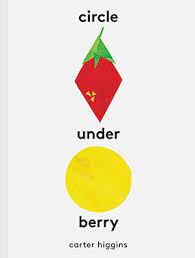
circle under berry, by carter higgins. Chronicle, Raincoast. 2021. $22.99 ages 2 and up


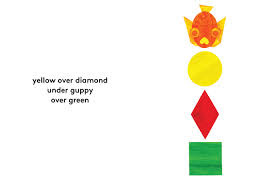
"lion under scarlet

scarlet over frog

lion over scarlet
    under oval 
      over frog
"

Oh, I hope you have a new baby or a happy toddler in your life! If you do, this is the perfect Christmas gift, or anytime gift, for a little someone you love. I know exactly who I am gifting it to next week. 

Take nine basic shapes, add impressive vocabulary, eye-catching colors, and you have only skimmed the surface of the learning that will happen when you share this truly exceptional book. It is such a collection of images, with a charming and well-planned structure. Throw in hearing and learning prepositions that are a part of language building, and a chance to watch any shape take on a new persona, and you will be amazed.

It is a book filled with rhythm and rhyme, making it perfect to read many times over. Each time it brings delight and wonder for those little ones listening.  The constant shuffling of one form to a different place, the beauty to be found in the brilliant named colors, and the possibilities to be discovered with each visit to its irresistible pages ... what more is there?  

Creating artwork using hand-painted papers that are collaged and then assembled digitally, Carter Higgins invites careful consideration and observation in a truly remarkable new book for our youngest readers.                                                                              


Sunday, May 16, 2021

My Red Hat, written and illustrated by Rachel Stubbs. Candlewick Press, Penguin Random House. 2020. $22.99 ages 3 and up


"This hat holds dreams, 

hides secrets, 

and covers fears."

As a grandparent, I love reading new tales of the relationships between grandparents and their grandchildren. I live far away from mine, but am blessed to be able to visit with them daily because of the various platforms we can use today. It keeps us in close contact, and allows us to know each other despite the distance. 

The grandfather in this new book lovingly gives his granddaughter his red hat. Along with the gifting of the tangible, he shares all the many things the hat can do. It offers protection from sun and rain. It can be silly, serious, and necessary. It makes her easy to find in a crowd, unless everyone else is wearing a red hat, too. It has endless possibilities. The hat is hers. 

Through all of life's adventures and worries it will be with her, until she returns to home and love. 

Through the reading and paying careful attention to the accompanying ink and graphite digital images, readers see the perfect moments and the special bond between the two: warm, quiet, uplifting, and loving. What more can a child ask? 

Bring on the red hats!                                                                             


Saturday, August 1, 2020

The Keeper of Wild Words, written by Brooke Smith and illustrated by Madeline Kloepper. Chronicle Books, Raincoast. 2020. $24.99 ages 6 and up

"From sunup to sundown,
we'll walk and run and walk
again,
sit and wait,
listen and touch,
until we find every word on
the list," said Mimi.
"Or every word on the list
finds us."
"I'm ready," said Brook, and
they were off."

In this heartwarming and thoughtful book that describes a visit between two generations, the little one is looking for something special. It will be her show and tell on the first day of school. We can only hope, at this point, that there will be a 'first day of school' this fall for many children as the pandemic rages on.

As they wander Mimi explains to her granddaughter Brook that many words concerning the world of nature are beginning to disappear. Mimi is a writer and someone who uses words that matter in everything she does. She expresses a need for 'keepers' of such words and encourages Brook to know them, and to care about them enough to use them. Mimi has nineteen words on her list; together they will look for them. 

"Words disappear if we don't share
them when we talk.
If we don't write them in our stories.
If we don't read them in our books."

The list begins with acorn, and moves through the alphabet to wren. In between are words familiar to many readers. They are off for a day of adventure and discovery! They find the words from the list as they walk, each one encouraging a lovely description, and a quiet look at the nature that surrounds them. They visit the shimmering pond, the bright meadow, the quiet of the woods, a babbling brook ... where Brook learns the reason for her name.

Does she now have what she needs for show and tell? You can bet that she does!

Vivid descriptive wording, and bright artwork that honors their natural surroundings make for a day filled with the wonders of their environment and the joy to be found in words worth keeping.

On the last page, readers will find a pouch, and voiced encouragement to begin collecting their own wild words.                                                                             


From Brooke:

Several years ago, I learned that the Oxford Junior Dictionary had decided to remove over 100 natural words from its pages—my namesake, “brook,” being one of them. The editors no longer felt the words had relevance for today’s children. At first I was angry, then disillusioned, and ultimately very sad. But the power of being a writer is that you can create a world you want to see. I decided to write a book where some of these lost wild words would be celebrated and recognized beyond the pages of the dictionary. To make sure they remained an integral part of our language and our children’s stories. Nature has always been a crucial part of my life, and my daughter Mimi’s, too. We were fortunate enough to raise her on our property in Bend, Oregon with many of these wild words naturally present. I wanted to write a book that would allow children everywhere to experience the beauty of nature and feel what it’s like to wander and explore. It’s absurd to think that nature could ever be irrelevant to children. In fact, I’d argue that in the technology-filled world we now live in, nature plays a more important role than ever to provide a place to dream, rest, and wonder. I hope parents, grandparents, libraries, and schools will all become Keepers of Wild Words by sharing this book—and most importantly, the words it celebrates.

Wednesday, April 8, 2020

Red House Tree House Little Bitty Brown Mouse, written by Jane Godwin and illustrated by Blanca Gomez. Dial Books for Young Readers, Penguin Random House. 2019. $22.99 ages 3 and up

"Pink shoes
      Blue shoes
Green shoes
       Red.

Shoes go on your feet.
What goes on your head?

Purple fish
      Orange fish -
rainbow
      tail."

Oh, she's an industrious one - the little mouse who stars in the engaging picture book. She packs her suitcase and sets off to accompany little ones on this journey of discovery. Each turn of the page is a sweet invitation to readers and listeners to take the time to immerse themselves in all there is to see.

First, it is a concept book that encourages young children to take note of both color and number. It is also filled with lively language that builds on rhyming, listening, and new vocabulary. though not mentioned again, astute observers will spy that wee tiny mouse. She does appear on every new spread. The journey is perfectly paced, always directing the audience's attention to the questions being asked and things to be noted.

"Brown dog
         Red dog
Dog with a
          spot.

Dogs that are friendly,
and dogs that are not."

Blanca Gomez ensures that delighted attention will be paid with each new scene. They are brightly colored, with visits to many of the community's familiar places - the streets, a flower garden, local transit, the sidewalk, curb and street crossing, the aquarium, the ice cream store ... Kids are asked to make decisions when thinking about safety, flavor, observation, and always attending to the many details provided.

The final page asks a question that will send children back to the beginning -

"and did you spot that mouse?"

The mouse and her suitcase? If that isn't enough, the author adds a bit of extra fun using the endpaper images. She suggests that a careful look at them might lead readers back to a 'related image in the story'. What fun!
                                                                               

Saturday, January 4, 2020

A Day So Gray, written by Marie Lamba and illustrated by Alea Marley. Clarion Books, Houghton Mifflin Harcourt. Raincoast, 2019. $23.99 ages 3 and up

"This field is blah brown. 

No, it isn't! ...

It's dots of orange,
and vines of black ...
with sticks of licorice red,
and poofs of tan.

Well, this snow is boring 
white."

It's funny how even little ones can see the world from different perspectives. In this book about just that, two friends take themselves outside on a snowy day meant for exploring. One thinks the day 'is so gray.' The other will not be discouraged by her friend's complaint.

Once they are outside, she encourages her rather grumpy friend to look beyond the clouds to the many splashes of color that are there, if only one looks. She says there are 'soft brown', and 'shining blue'. Even 'silver splashes on bright yellow'. What could be better than that?

As they journey onward, each gloomy remark is matched by resounding affirmation of what is really there to be seen. The conversation continues as they wander through the snowy environs. Once inside, the persnickety child cannot even find joy in the warmth of the fireplace. She doesn't like orange. She is reminded there is much more than orange in the colors that emanate from the roaring fire. Finally, she agrees that it is cozy. Aha! Cozy can be found in some of  the most amazing, colorful things that surround us.

Where can we find color in bleak, overcast days? What happens when we slow down and take note of all that is around us? When we share our optimism, the bleak world can be changed for others.

Saturday, September 28, 2019

Summer Green to Autumn Gold: Unleashing Leaves' Hidden Colors, written and illustrated by Mia Posada. Millbrook, Thomas Allen and Son, 2019. $29.99 ages 8 and up

"Many leaves have mixtures
of yellow, orange, red and
brown pigments.

The world is a rainbow of
scarlet and orange, burgundy
and gold.

Soon the stems of the leaves
start to separate from the tree. The wind blows them loose."

The leaves on the trees in my front yard barely had time to begin turning color when a lashing rainstorm sent leaves flying and branches almost bare. The colors and cooler days are the things I love about fall; the wind and sudden dearth of those beautiful leaves is what disappoints me. The colors seem to last only a few days, perhaps weeks if we are very lucky. But, not very long as it turns out again this year.

Explaining the science behind the changes that trees make seasonally is a welcome premise for this gorgeous new book by Mia Posada. You can see its beauty in the book cover above. Endpapers are bold green, and the first double-page spread uses that color and other shades of green to point out to readers a number of the leaves that might be seen in summer.

"From emerald to jade and
every shade between, summer
leaves fill the world with green!"

The author begins with that, explaining why. Chlorophyll is green; chlorophyll also collects energy from the sun to feed the tree and help it grow. There are other colors inside leaves, hidden by the chlorophyll. As the air cools and darkness lengthens, the plant begins getting ready for much colder days and nights ... winter. It no longer needs chlorophyll. That allows the other colors to make an appearance. Thus, we get the beauty of autumn! Finally, trees are bare. They make good use of winter weather to rest in preparation for a new growing season.

Short sentences ensure that just enough information is provided on each spread. The use of scientific terms provide extended learning. Readers will appreciate the fairly simple, yet accurate, explanation for why leaves change color and how that happens. The cut-paper collage and watercolor art helps give context and beauty to any new learning. Observant readers will note the family in some of the images, and see that changing seasons have an effect on their lives as well.

Back matter includes four sections: Different Kinds of Leaves, Pigments in Nature, Fall Colors Around the World and Fall to Fall, Colors Can Change. A glossary and a list of hands-on experiments with leaves and pigments are also provided.
                                                                                 

Friday, July 19, 2019

the Crayon Man: The True Story of the Invention of Crayola Crayons, written by Natascha Biebow and illustrated by Steven Salerno. Houghton MIfflin Harcourt, Raincoast. 2019. $25.50 ages 6 and up

"Edwin thought about his company's
inventions:

When you drew a picture with a gray
slate pencil, it rubbed off at the drop
of a hat.

When you drew a picture with their
white chalk, it smudged everywhere.

If you drew a picture with Edwin's new ... "

Edwin Binney wanted the best for children ... something to color with that was safe and cheap enough for their parents to purchase. His invention of Crayola crayons has obviously had a lasting effect on art programs in school and in homes everywhere.

Edwin was a man to whom color brought great happiness. He spent his days working with and selling carbon black, 'a new kind of pigment'. Also an inventor of slate pencils (gray), chalk (white), and a black wax crayon for writing on various surfaces, he was encouraged by his wife (and others) to invent better crayons for children.

His path was set. He led a team who tried and failed, then tried again ... always experimenting to find the perfect mix that would provide a world of color for children as they went about creating their personal masterpieces.

"They came home covered in color.
They experimented some more and discovered -
a pinch of this pigment
a sploosh of that one,
a little hotter, a little cooler ...

and voila. LOTS of different shades! 
Now there were greens, oranges, violets, and pinks too!
Edwin came home covered in color."

Children who use crayons with abandon will recognize many of the names given to the wide array of crayons available today. The first eight packs had everything children at the time needed for their artistic pursuits ... and their parents could afford to buy them. Each new color invented had to have a name appropriate to its shade and provide children the colors needed to draw anything they wanted to draw.

The illustrations are bold, historically accurate, filled with expression and detail. Go to Steven Salerno's website at ,https://www.stevensalerno.com to see how he created the many wonderful images for this entertaining read.

Text boxes throughout provide additional, relevant information for readers. Follow-up matter provides a 10-step look at the way Crayola crayons are made today; as well, there is further biographical data provided for Edwin Binney, and a selected bibliography. 
                                                                     

Wednesday, March 27, 2019

My Forest Is Green, written by Darren Lebeuf and illustrated by Ashley Barron. Kids Can Press, 2019. $18.99 ages 3 and up

"My forest is tall.

My forest is short.

My forest is fluffy.

My forest is prickly.

My forest is rough.

My forest is smooth."

This is a truly amazing concept book for little ones who have an abiding interest in the outdoors, and what can be found there. The child narrator has knowledge of the forest he knows so well, and is a welcome presence as we trek through it with him.

He sees it from his apartment's window when he wakes in the morning. He loves it so much that he also has created images of it to hang on the walls at home. It is evident that he is an artist, and sees his outdoor forest with an artist's eye, noting its textures, its weather, its colors, and recreating what he sees, when he gets home with found objects and an artist's supplies.

He describes its many assets in simple declarative sentences that have real appeal for a child reader's senses and understanding. He uses his eyes, hands, and ears to make discoveries as he ventures along its pathways, then replicates what he sees in his journal first, and then in the art he creates once he  returns home.

There is such joy in his discoveries and it is evident in the remarkable collage images created to accompany his story. This is a book that will be requested on numerous occasions. It may even spark artistic experimentation. 

It offers peace and inspiration.

Friday, March 22, 2019

The Happy Book, and other feelings. By Andy Rash. Viking, Penguin Random House. 2019. $23.99 ages 5 and up

"I have a really big egg
I can't even lay! 

I got a cramp in my
arm from sawing!

My car won't start! 
I need that bike! 

Give me that thing! 
No way!"

Camper and Clam provide an enthusiastic invitation for readers to join in a celebration of friendship and happiness. Their story begins in a wash of warm yellow, meant to signify the sunny state of that friendship. Things go awry when Camper indulges in eating an entire cake that Clam has baked. Camper offers thanks, but no apology.

Thinking the book is done, Camper is surprised to discover a door. Passing through it, he enters The Sad Book. a place that Clam describes as 'where I go when I'm not feeling happy', and introduces a friend, Trombone. Clam voices the sadness felt at not being able to share the cake. Trombone commiserates with sadness of its own. Camper cannot fathom staying put in such a place. Clam cannot imagine being back in The Happy Book. 

Camper is furious with the turn of events and creates a brand new book that helps to explain how he is feeling.

"The Angry Book 

"Oh, hello, Clam. This is MY new
book and MY new friend, Wet Hen.

Bawk bawk bawk!"

Washed with red, and filled with angry dialogue between the apparent friends, it concerns Clam who asks Camper why he is so mad.

"I'm angry that I can't make
you happy and scared we
won't be friends anymore."

What a dilemma, and what a winning way to show young readers the depth of emotions felt in just one small burst of time. Moving from anger to fear, their world turns green. While there, the two discover that being together makes the world brighter and less frightful. In a parting note, the five friends plan a feelings book to showcase the ways they feel about all that has transpired.

The cartoon-like illustrations add interest and pertinent details that will encourage discussion. They add  humor, and allow kids to think about their own emotions, and ways to let others know what they are feeling. They are energetic and playful, with the speech bubble dialogue that kids love, thus providing for shared reading with early readers taking individual parts.

A terrific readaloud!

Tuesday, December 18, 2018

Blue, by Laura Vaccaro Seeger. Roaring Brook Press, Macmillan. Raincoast. 2018. $23.50 ages 3 and up


"maybe blue

very blue

ocean blue

sky blue"


Green (Roaring Brook, 2012) was a concept book of the best kind. Laura Vaccaro Seeger showed us green in its many variants and ended with a hint at keeping an eye of the environment and protecting it. Blue is another striking book about color; it also tells a fascinating story about a boy and his dog.

'Baby blue' is the perfect opening. A baby boy and his pup, tucked together with a baby blue blanket that will be there with them through their life together. It is some life. The two share the joys of growing, the ups and downs that make a life together, and the boy experiences the sadness of loss. It is a story that rings true for those who share it.

As she has done so expertly in earlier concept books, Ms. Seeger uses acrylic paint on canvas to give texture and expression to each of the double page spreads. The colors are deep and perfectly chosen, as are the couplets that accompany each new stage in the lives of the boy and his beloved pet. Her signature die-cuts invite careful consideration and a turn of the page to make the connections.

Her story is filled with joy, a hint of great sadness, and a return to joy. Remember to watch for the blanket as you make the transition from one stage of life to the next. Heartwarming and hopeful, you need this book. I promise you will read it more than one time!


Monday, November 19, 2018

Who Eats Orange, written by Dianne White and illustrated by Robin Page. Beach Lane, Simon & Schuster. 2018. $23.99 ages 3 and up

"Turkeys, too.
Turkeys?

NO! Turkeys don't
eat red.

They eat ...

yellow.

Who else eats yellow?"

Little ones love books that help them with new learning, and that provide a guessing game for them as they go. This entertaining book helps them with both of those interests. The pattern is set early with the question on the front cover.

"Who eats orange?
Bunnies in their hutches do.
Chickens in the henhouse too.
Who else eats orange?
Goats. 
Pigs. 
Gorillas too. Gorillas?
No!"

Gorillas eat a different color when choosing their foods. And so the book goes. Providing 'food for thought' for the little ones who will share it. Soon, they will be reading along and letting others know all they have learned about colors, about animals who choose food by color, and about the foods themselves. Fun, indeed.

The animals chosen to answer the color question are diverse, and not always well known. This adds another level of learning. The Adobe Photoshop illustrations are boldly colored, realistic and  very
appealing. Their bright eyes invite close observation and give a playful feel to the book.

The final question involves the reader and the fact that they eat all colors when choosing their foods!

Back matter provides further information about the habitats visited, the animals presented and the foods they consume.

"TUNDRA 

... Yellow-bellied marmots are
generally herbivores that like to
feed on the leaves and blossoms
of a variety of grasses and forbs,
such as alpine forget-me-nots,
which are some of the first flowers
to bloom on the tundra. They also
eat fruit, grains, and sometimes
bugs."

Fun, and full of information.


Monday, July 9, 2018

Vivid: Poems and Notes About Color, written and illustrated by Julie Paschkis. Henry Holt and Company, Macmillan. Raincoast, 2018. $23.50 ages 7 and up

'BLUE

Oh, what did I do?
Blue-hoo,
Blue-hoo!

Even though blue is often 
associated with sadness, 
it is the most popular 
color, according to polls
taken in ten countries ... " 

I love the fact that Julie Paschkis chooses color as her focus for this new book of poetry. Her artwork is always bold and appealing. I first admired her work when I read Mrs. Chicken and the Hungry Crocodile (Henry Holt, 2003) and then Through Georgia's Eyes (Henry Holt, 2006). If you want to see more of the art she makes and to read her blog, go to https://juliepaschkis.com  I'm sure you will find it interesting and inspiring.

That being said, I wasn't surprised to find I really like this book, too. It is a gorgeous examination of color. I admire the way Julie has placed her art alongside the varied and enjoyable poems, and the short, informative paragraphs included about each spread's featured color.

The poetry is as varied as the art with each turn of the page. One that I especially like has a connection to a fairy tale, and the role color plays in our language. She even leaves her audience with a question to ponder.

"Red to Pink

Jack, in the red,
sold old brown cow
for three green beans.
Felt blue.
Black magic or green thumb?
Beans grew.
Phew.
Up, up slow.
Fee. Fi. Fo.
Ogre grim.
Fum.
White lie.
Jack didn't die.
Got bold.
Stole gold.
Quick, think!
Down in a wink.
Jack, tickled pink.

Lots of expressions include colors: 
feeling BLUE, tickled PINK, telling
a WHITE lie. Why? Why are you 
GREEN with envy instead of
ORANGE with envy?"

Hmmm???

Tuesday, June 12, 2018

Blue Rider, by Geraldo Valerio. Groundwood Books, 2018. $19,95 all ages


"A high rise apartment.

A young girl in blue.

A busy city street.

A book.

Bedtime magic."

Here's another outstanding book to add to your growing list of wordless books. They can be such powerful conversation starters, and offer kids learning a new language a way into stories that ring true for all readers. In his new book, Geraldo Valerio engages the imagination of children, while also speaking to the magic that is art.

Opening pages show a somewhat drab urban landscape ... tall, towering buildings, a many-windowed apartment building showing only one young girl looking out, crowded streets and then, that girl in bright blue with a matching backpack as she exits her home. Almost every eye at the turn of the page reacts with awe to a book on the ground in front of her. She picks it up; her quick action changes everything. Off she goes, leaving others to pay attention to their phones, their routines, walking their pets.

Once home, the girl settles for a closer look. Her imagination soars as she envisions the fine blue horse from the cover fly out over the urban landscape, transforming her city into a burst of brilliance  that transforms each ensuing spread. Their magical ride ends with her arms wrapped around the book, a satisfied smile on her slumbering face. One final look shows the walls of her once-drab bedroom completely changed to reflect the pinks, blues, yellows, oranges and greens of her imagined journey.

The art is abstract, and inspired by 'the German Expressionist group known as Der Blaue Reiter, which formed in Munich in 1911 and included Franz Marc and Wassily Kandinsky.' This is a gorgeous homage to the visual arts and the joy brought through color and motion, and an interest in  artistic expression.
                                                                       

Friday, June 1, 2018

They Say Blue, written and illustrated by Jillian Tamaki. Groundwood, 2018. $19.95 ages 4 and up

" ... but I don't need
to crack an egg to know
it holds an orange yolk
inside. I can't see my blood,
but I know it moves around
my body even when I am
perfectly still."

And when we play,
I feel it race faster
to keep up,"

Wow! I was watching the announcements yesterday from Roger Sutton, editor of the Horn Book, for the winners of the Boston Globe-Horn Book awards for 2018, and this is the winner in the picture book category. Congratulations, Jillian! It is a well-deserved award, and I will tell you why I think so.

I have just spent a month with a three-year old. Her wonder at the world, what she knows, and what she has seen, was evident every single day. Her imagination knows no bounds. Jillian Tamaki, in her first picture book for young children, has perfectly captured that world. Her young narrator loves the water, and notes that she has been told it's blue; but, it is not when it flows through her hands. Those things she can see, and some she can't, and what she can imagine, are expressed in lovely, flowing language that carries readers from page to page.

Her joy is shared with quiet candor as she moves from taking note of the colors she sees to the imaginative matters of her mind. When a grey sky and rain spoil her fanciful boat journey across a 'golden ocean', she bends to note the appearance of a purple flower and switches her attention to the new growth found in spring's arrival. From there, readers are invited to an appreciation for the passing of the seasons. It is the way a child's mind works!

There are so many opportunities to pause and consider the awareness of this child, and to talk about what is happening. In spring warmth she stretches her arms to the sky and becomes a tree. From that new perspective, she makes a decision:

"Standing tall, I angle my green
leaves to feel the sun.
I think I'll stay quiet and listen to
the sounds of the summer."

How lovely! Ms. Tamaki's acrylic and Photoshop artwork swirls with movement and an awareness of the child's internal rhythms, as she revels in everything she sees around her.

Imaginative and wonder-'full'!
                                                                           

Tuesday, May 22, 2018

Summer Color, written by Diana Murray and illustrated by Zoe Persico. Little Brown and Company, Hachette. 2018. $23.49 ages 4 and up

"The wind starts to stir.
A few drops pitter-patter,
and critters that creep in
the grass quickly scatter.
Rain batters down on the
blustery scene,
as cardinals fly into
treetops so green."

The family has gathered to have a cool drink together on a warm summer day. Two children can't ignore the allure of summer freedom and are off to explore the countryside. Away from the yard, down the path past the well, and through the meadow they run. Realizing they are a distance from home when a storm blows up, they must make a mad dash for  safety. As they go, they continue to take note of their beautiful natural surroundings - a creek, a waterfall, the nearby lake and the meadow.

"Our soggy shoes squeak when we race through the door.
We crowd by the window and watch the rain pour."

I like the way the author weaves common colors through the entirety of her verse. The pace picks up  quickly as the children notice the dark gray clouds and run home, in contrast to the drowsy and relaxed pace at the beginning while the family enjoys refreshment in the summer heat. Readers will enjoy the setting, and the day's action, noting the many affable details included in Zoe Persico's lively digital artwork.

It will strike an agreeable note with little ones as they enjoy the rhyme and rhythm of the text, and their introduction to the colors in this wondrous world.